Who Really Built Salesforce?
It wasn't just Marc.
The story Silicon Valley tells is a clean one. Visionary founder. Bold idea. Revolutionary technology. Marc Benioff dreamed up the cloud, built the platform, and changed business forever.
That story is missing half the people in it.
Who were the early Salesforce customers? Small businesses. Independent operators. Companies with 10, 20, 50 people who took a genuine risk on an unproven idea called "software as a service" before anyone knew if the cloud was real or a fever dream.
They paid the subscriptions that funded the servers. They filed the support tickets that shaped the roadmap. They moved their customer data — their most valuable asset — into someone else's infrastructure on nothing but a promise and a handshake with the future.
They were not customers. They were co-builders. They just never got paid like it.
What They Got In Return
Price increase letters.
Paid add-ons for features that used to be included. Constant upsells. New tiers, new modules, new "editions" — each one a slightly more expensive version of the thing they already paid for.
The privilege of buying stock in a company they helped build — stock they don't control, in a company that no longer needs them the way it once did.
Overseas customer service. Automated support queues. The distinct feeling of being a line item in a revenue retention model rather than a partner in something being built.
That's what rent buys you.
You pay every month. The platform gets more valuable. You get a price increase letter.
This isn't a Salesforce story. It's a SaaS market story. Salesforce is just the oldest and most honest example of how it ends.
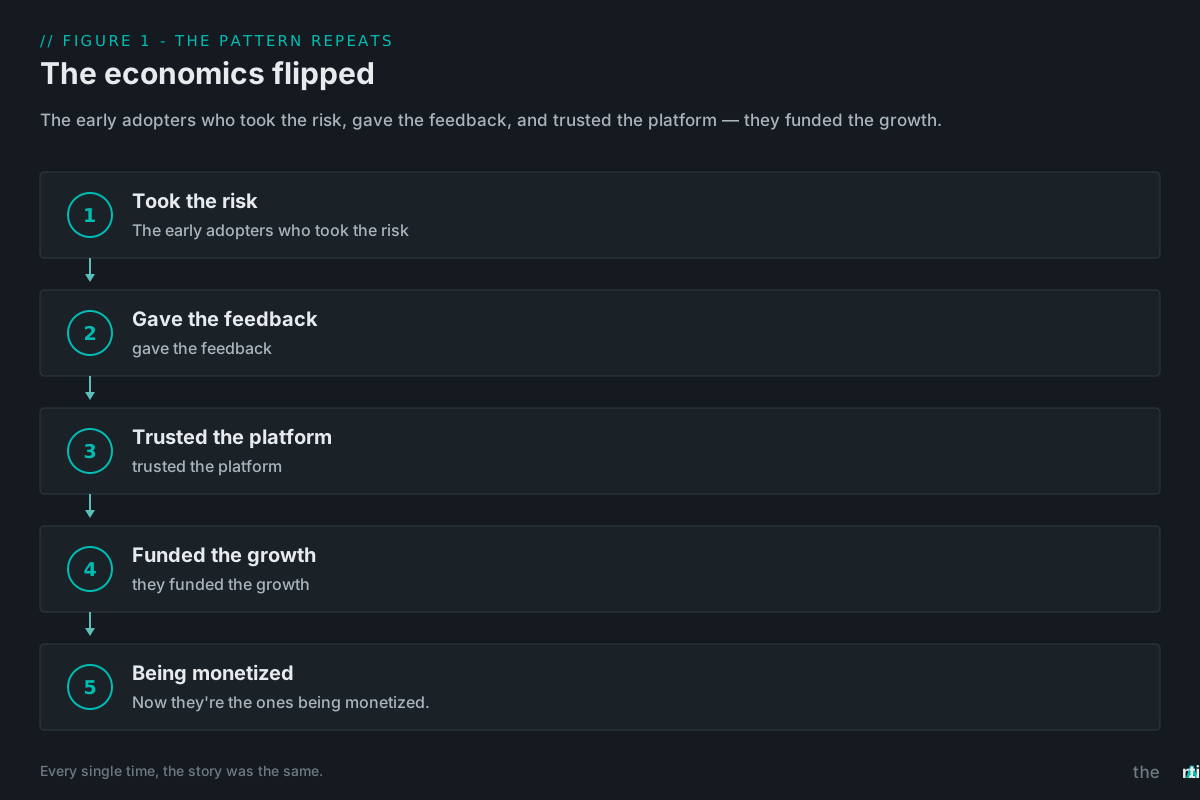
The Pattern Repeats
QuickBooks raised prices four times in three years. HubSpot introduced seat limits after a decade of unlimited contacts. Monday.com added a "platform fee" on top of per-seat pricing. Zoom added AI features to a higher tier. Adobe moved everything to Creative Cloud and called it progress.
Every single time, the story was the same. The early adopters who took the risk, gave the feedback, and trusted the platform — they funded the growth. When the growth came, the economics flipped. Now they're the ones being monetized.
The product didn't get worse. It got more expensive. The relationship didn't end. It just stopped being mutual.
The Ownership Question
Here is the question nobody in SaaS wants you to ask:
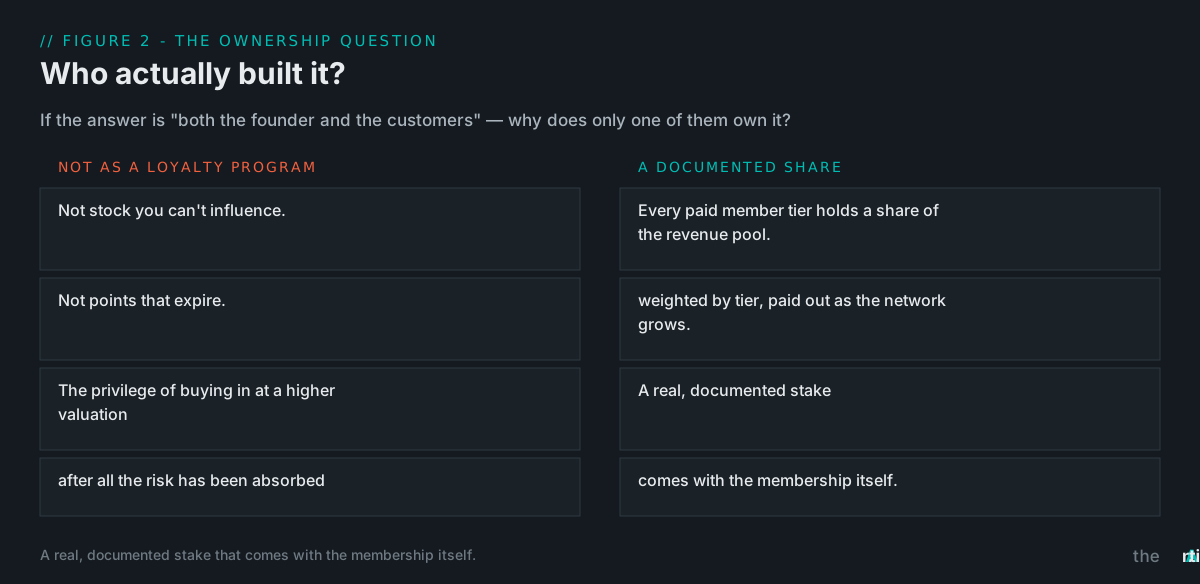
If the platform is valuable because of the data, the feedback, the usage, and the trust that customers poured into it over years — who actually built it?
And if the answer is "both the founder and the customers" — why does only one of them own it?
This isn't an abstract question. It has a practical answer. You can structure a platform so that the people who help build it hold a stake in what it becomes. Not as a metaphor. Not as a loyalty program. As a documented, legally structured share of the revenue it generates.
That's what we built.
The nAItion runs on one premise: if AI is learning on your data, you should own a piece of what it becomes. You always had the right. We're giving you the way.
Every paid member tier holds a share of the revenue pool — weighted by tier, paid out as the network grows. Not stock you can't influence. Not points that expire. Not the privilege of buying in at a higher valuation after all the risk has been absorbed by someone else. A real, documented stake that comes with the membership itself.
Founding Believers — the people who showed up before it was obvious — get an accelerated share on top. But the pool itself belongs to every paying member. The nAItion for the nation.
Update, 7 Oct 2026: the Founding Believer seat levels are retired. Investment opportunities are available: investors.imaginaitioninc.com.
The door is open at every tier, for everyone who'd rather own a piece than rent a seat.
What Rent Buys You
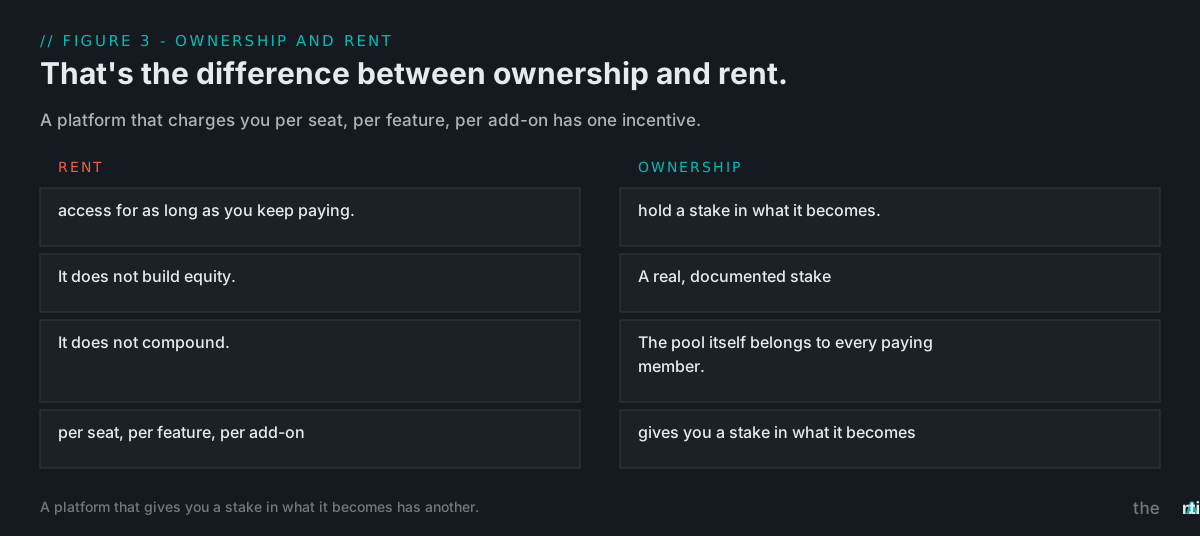
Rent buys you access for as long as you keep paying.
It does not build equity. It does not compound. It does not give you a seat at the table when the price increase letter gets drafted.
The small businesses that helped build Salesforce deserved better. The ones building their operations on AI platforms today deserve better. Not as a moral argument — as a structural one.
A platform that charges you per seat, per feature, per add-on has one incentive. A platform that gives you a stake in what it becomes has another.
That's the difference between ownership and rent.
We're not building a platform you rent.
We're building one you own.
The nAItion membership is open. No per-seat pricing. No add-on fees. No price increase letters. Find your tier.