Your CRM Doesn't Know Your Customer
The name of the category is Customer Relationship Management.
The irony is that most CRMs manage records, not relationships.
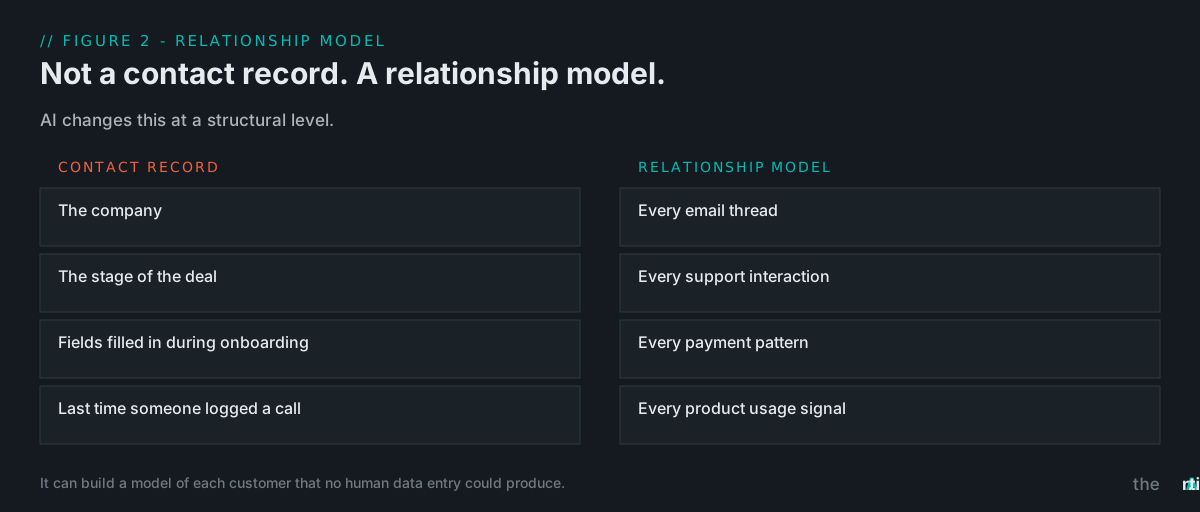
They know the name of the contact. The company. The email address. The last time someone logged a call. The stage of the deal. The fields that got filled in during onboarding, half of which are still empty because the sales rep was busy and fully intended to come back.
They do not know the customer.
What Knowing a Customer Actually Means
Think about the last time you felt genuinely known by a business you worked with.
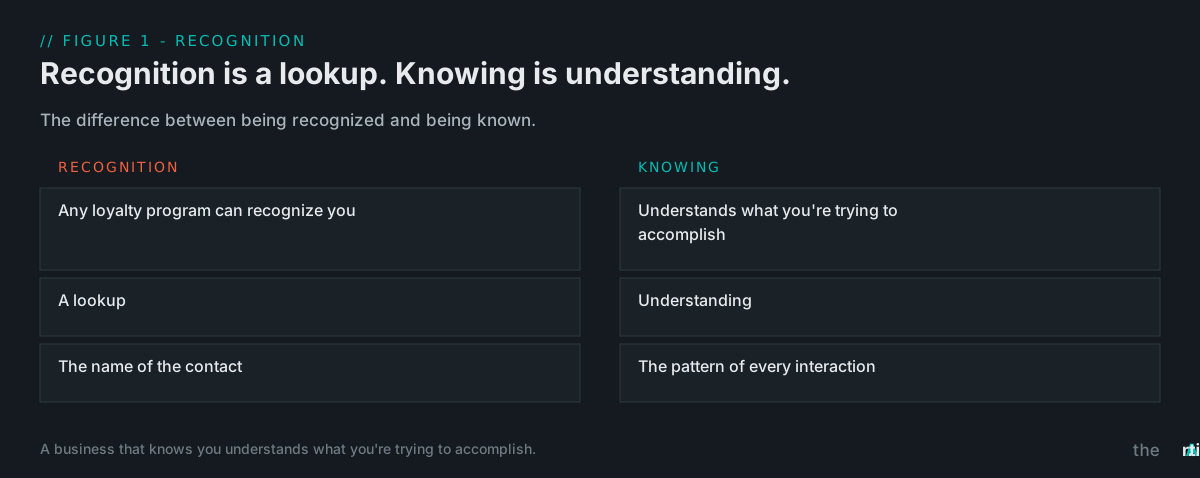
Not recognized — any loyalty program can recognize you. Known. The difference is that recognition is a lookup. Knowing is understanding.
A business that knows you understands what you're trying to accomplish. It knows which conversations you've had and what came out of them. It knows when something went wrong and what was done about it. It knows when you're in a buying cycle and when you need to be left alone. It knows your communication preferences because it paid attention to them over time.
That knowledge doesn't live in the contact record. It lives in the pattern of every interaction — every email, every support ticket, every payment, every renewal, every time you almost churned and why you didn't.
No CRM in history has actually captured that. They've captured a pale reflection of it.
What AI Changes
The reason CRMs couldn't capture real relationship knowledge before is that doing so required constant human attention and data entry. A CRM is only as good as what people put into it. People are busy, optimistic about updating records later, and constitutionally unable to capture the texture of a conversation in a dropdown field.
AI changes this at a structural level.
An AI that lives inside your customer relationships — that reads every email thread, processes every support interaction, monitors every payment pattern, tracks every product usage signal — can build a model of each customer that no human data entry could produce.
Not a contact record. A relationship model.
It knows that this customer asks detailed technical questions before every purchase, which means they need depth in the next proposal. It knows that this customer went quiet after the last price increase, which means the renewal conversation requires a different approach. It knows that this customer refers more business when they feel ahead of their industry peers, which means case studies matter to them.
This isn't surveillance. It's attention. The kind of attention that a great account manager gives to their best relationships — extended to every customer relationship simultaneously.
The Intimacy Argument
The most defensible competitive advantage a business can have is that its customers feel genuinely known.
Not because the tool said "Hi [first name]" in an email subject line. Because the interaction demonstrated real understanding of who they are and what they're trying to accomplish.
Products can be copied. Pricing can be matched. Marketing can be outspent. The relationship that makes a customer feel like they'd be giving something up by leaving — that can't be copied. It can't be bought. It can only be built through sustained, intelligent attention over time.
Your CRM was supposed to help you do that. It gave you a database instead.
What Your AI CSM Actually Does
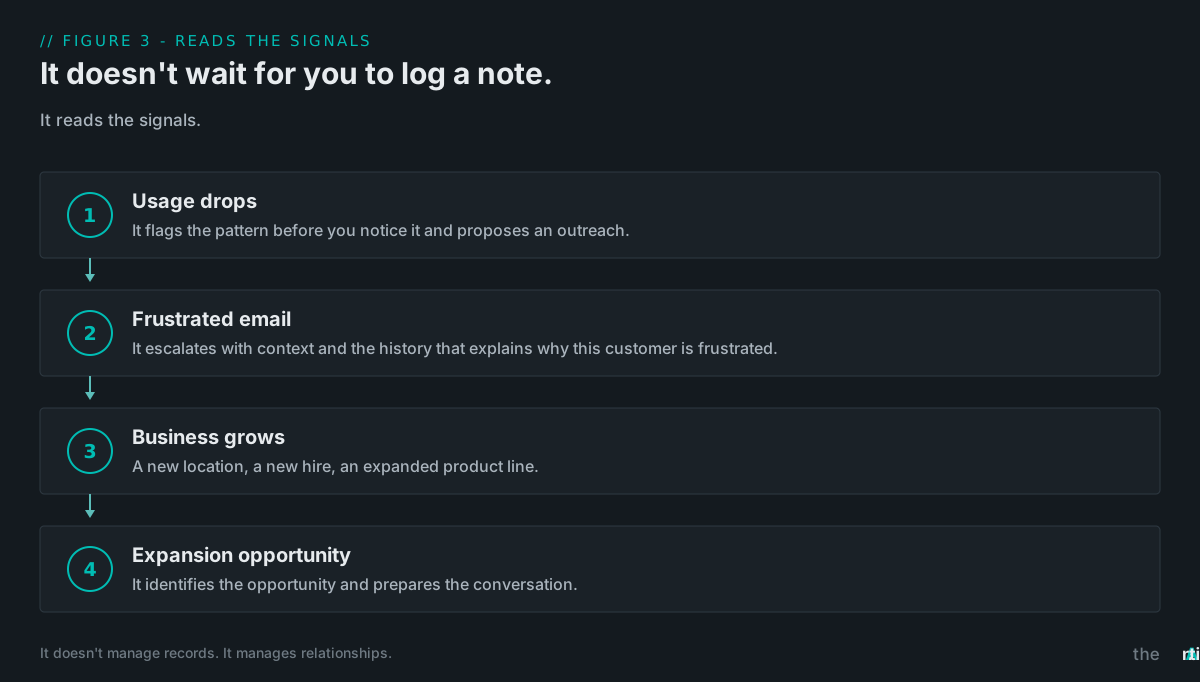
Your AI Customer Success Manager doesn't wait for you to log a note. It reads the signals.
When a customer's usage drops, it flags the pattern before you notice it and proposes an outreach. When a customer sends a frustrated email, it escalates with context — not just the email, but the history that explains why this particular customer is frustrated and what has worked before when they've been in this state.
When a customer's business grows — a new location, a new hire, an expanded product line — it identifies the expansion opportunity and prepares the conversation.
It doesn't manage records. It manages relationships.
That's what the category always promised. It just needed the right intelligence to deliver it.
Your AI staff knows your customers. All of them. All the time. See how it works.